Disclosure: This page contains affiliate links. If you buy through them, I may earn a small commission at no extra cost to you. I only recommend gear I'd actually use.
A full standing desk is a big, expensive piece of furniture — and on a small desk, there's simply nowhere to put one. A converter solves both problems: it sits on top of your existing desk and lifts your monitor and keyboard up when you want to stand, then drops back down when you want to sit. The trick on a small desk is finding one that's compact enough not to swallow your whole surface.
I focused this list on converters with smaller footprints, narrower widths, and designs that don't dominate a tight setup. These are the ones that actually make sense when desk space is limited.
Quick Comparison
| Converter | Style | Best For | Price |
|---|---|---|---|
| FlexiSpot Compact Riser | Z-lift, two-tier | Best all-around | $$ |
| Single-Tier Flat Riser | Flat single surface | Smallest footprint | $$ |
| Laptop Standing Riser | Mini, laptop-only | Tiny desks / laptops | $ |
| Electric Compact Converter | Motorized lift | Effortless adjusting | $$$ |
| Compact Sit-Stand Desk | All-in-one small desk | Replacing the desk | $$$ |
1. FlexiSpot Compact Standing Desk Converter — Best All-Around

FlexiSpot Compact Riser
The sweet spot for most small-desk users. It has a smaller footprint than the giant converters, a two-tier design that keeps the keyboard at the right height, and smooth gas-spring lifting so you can change positions in a second. Sturdy enough to trust your monitor on, compact enough to leave you working space. If you want one safe pick, this is it.
What's Good
- Compact footprint for the category
- Smooth one-motion height change
- Holds a monitor + keyboard comfortably
Watch Out
- Still occupies real space when seated
- Heavier than a simple riser
- You want a proper sit-stand solution
- Desk is at least 24" deep
- You use a separate keyboard
- Desk is very shallow (under 20")
- You only need occasional standing
2. Single-Tier Flat Riser — Smallest Footprint

Single-Surface Standing Riser
When even a two-tier converter is too much, a flat single-surface riser is the minimalist answer. One clean platform lifts everything together, and because there's no protruding keyboard tray, it takes up less depth — ideal for shallow desks. Simpler, lighter, and easier to slide aside.
What's Good
- Smallest depth in the category
- Clean, minimal look
- Lighter and more portable
Watch Out
- Keyboard sits higher (less ergonomic for some)
- Less surface for accessories
- Desk is shallow and depth is the enemy
- You want minimal visual clutter
- You stand infrequently
- Ergonomics are a priority (wrists)
- You stand for long stretches
3. Laptop Standing Riser — Best for Tiny Desks

Compact Laptop Riser
If you work mostly on a laptop, you don't need a big converter at all. A mini laptop riser lifts your screen to standing height for a fraction of the price and footprint. Perfect for the smallest desks, dorm rooms, or anyone who just wants to stand occasionally without a major purchase.
What's Good
- Cheapest way to stand
- Tiny footprint, easy to stow
- Great for laptop-only setups
Watch Out
- Laptop only — no separate monitor
- External keyboard recommended for ergonomics
- You use a laptop as your main screen
- Desk is very small (dorm, café)
- Budget is under $50
- You use an external monitor
- You stand for hours at a time
4. Electric Compact Converter — Most Effortless

Motorized Compact Converter
If you'll switch positions often, motorized lifting removes all the friction — press a button and it glides up or down, no lifting effort. Worth it for daily heavy use or if you have any wrist/back issues that make manual converters awkward. The splurge, but the nicest to live with.
What's Good
- Effortless button-press lifting
- Often has height presets
- Best for frequent switching
Watch Out
- Most expensive option
- Needs a power outlet
- You switch sit/stand multiple times daily
- Wrist or shoulder issues make manual awkward
- You want height memory presets
- You stand only occasionally
- No nearby outlet under the desk
5. Compact Tabletop Sit-Stand Desk — If You'd Rather Replace
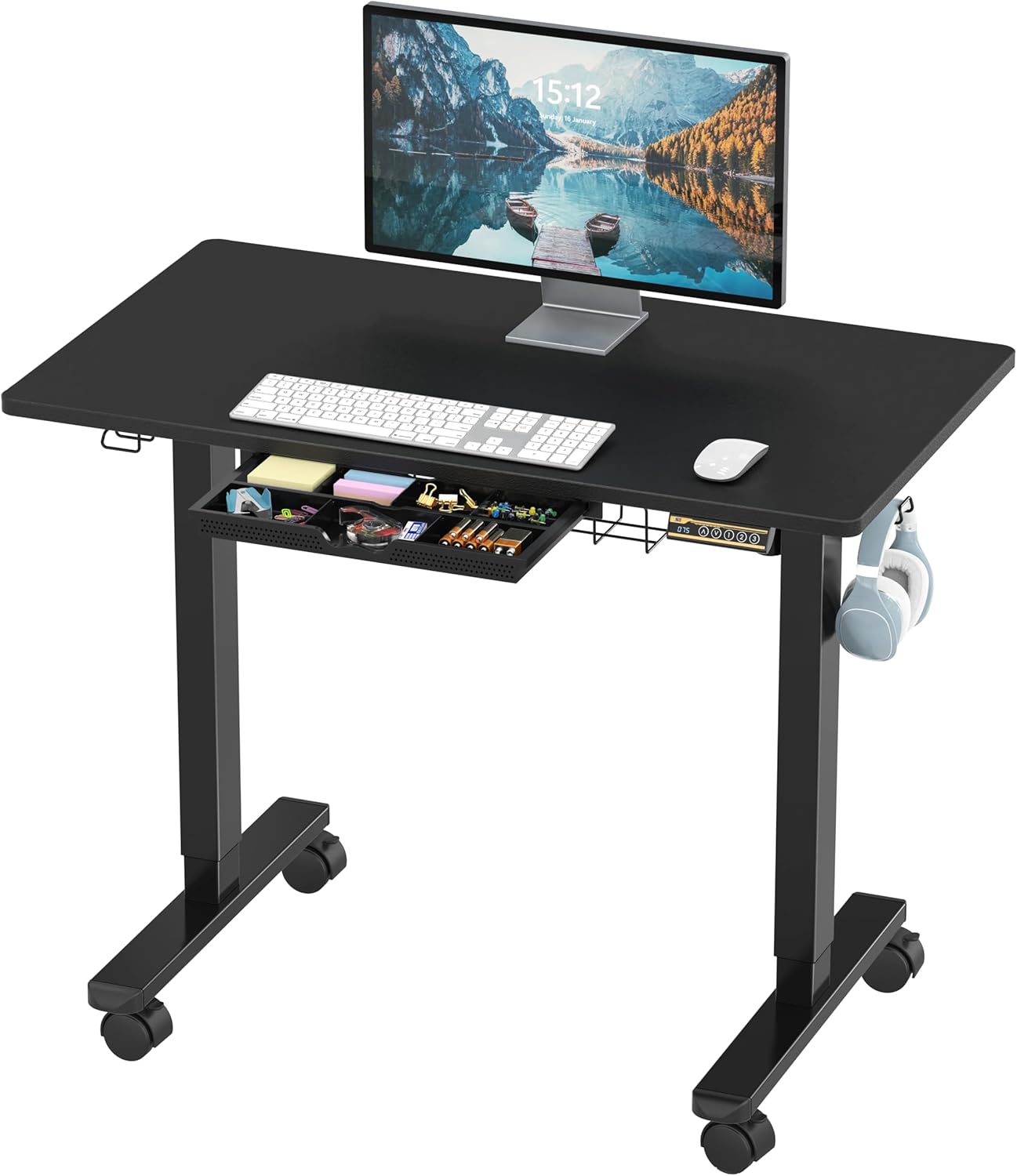
SHW 40-Inch Mobile Electric Sit-Stand Desk
Sometimes the smartest move on a small desk isn't a converter at all — it's swapping in a compact sit-stand desk with a narrow top. You get full standing capability with no converter eating your surface, in a footprint designed for tight rooms. Consider this if your current desk is on its last legs anyway.
What's Good
- No converter taking up surface
- Full sit-stand range
- Narrow tops made for small rooms
Watch Out
- Means replacing your desk
- Assembly required
- Current desk is worn out anyway
- You want maximum surface space
- You're setting up a new workspace
- You like your current desk
- You rent and can't bring in furniture
What to Look For in a Small-Space Converter
Footprint when lowered. The number that matters most. A converter sits on your desk all day, even when you're seated — measure how much surface it occupies in the down position, not just standing.
Lift style. Gas-spring/Z-lift designs are smooth and cheap; electric is effortless but pricier; flat risers are simplest. Match it to how often you'll actually switch.
Weight capacity. Make sure it comfortably holds your monitor(s) plus odds and ends. Most handle a single monitor easily; check specs for dual setups.
Keyboard height. Two-tier models keep your keyboard lower and more ergonomic; single-surface models are more compact but raise the keyboard. Trade-off worth deciding up front.
Frequently Asked Questions
Do standing desk converters work on small desks?
Yes, but footprint is everything. Choose a compact or single-tier model and measure your desk depth first — the common mistake is buying an oversized converter that overwhelms a small surface.
Converter or a whole standing desk?
A converter is cheaper and keeps your existing desk. A compact sit-stand desk costs more but frees your surface entirely. If your desk is fine, get a converter; if it's due for replacement anyway, consider the desk.
How much should I spend?
Manual compact converters run $80–160 and suit most people. Laptop risers start around $35; motorized models run $200+. Spend more only if you'll switch positions frequently.
The Bottom Line
For most small-desk setups, the FlexiSpot compact riser is the best balance of footprint, sturdiness, and ease. Tight on space or budget? A single-tier riser or laptop riser does the job for less. Measure your desk's depth before buying — that one number prevents almost every converter regret.